
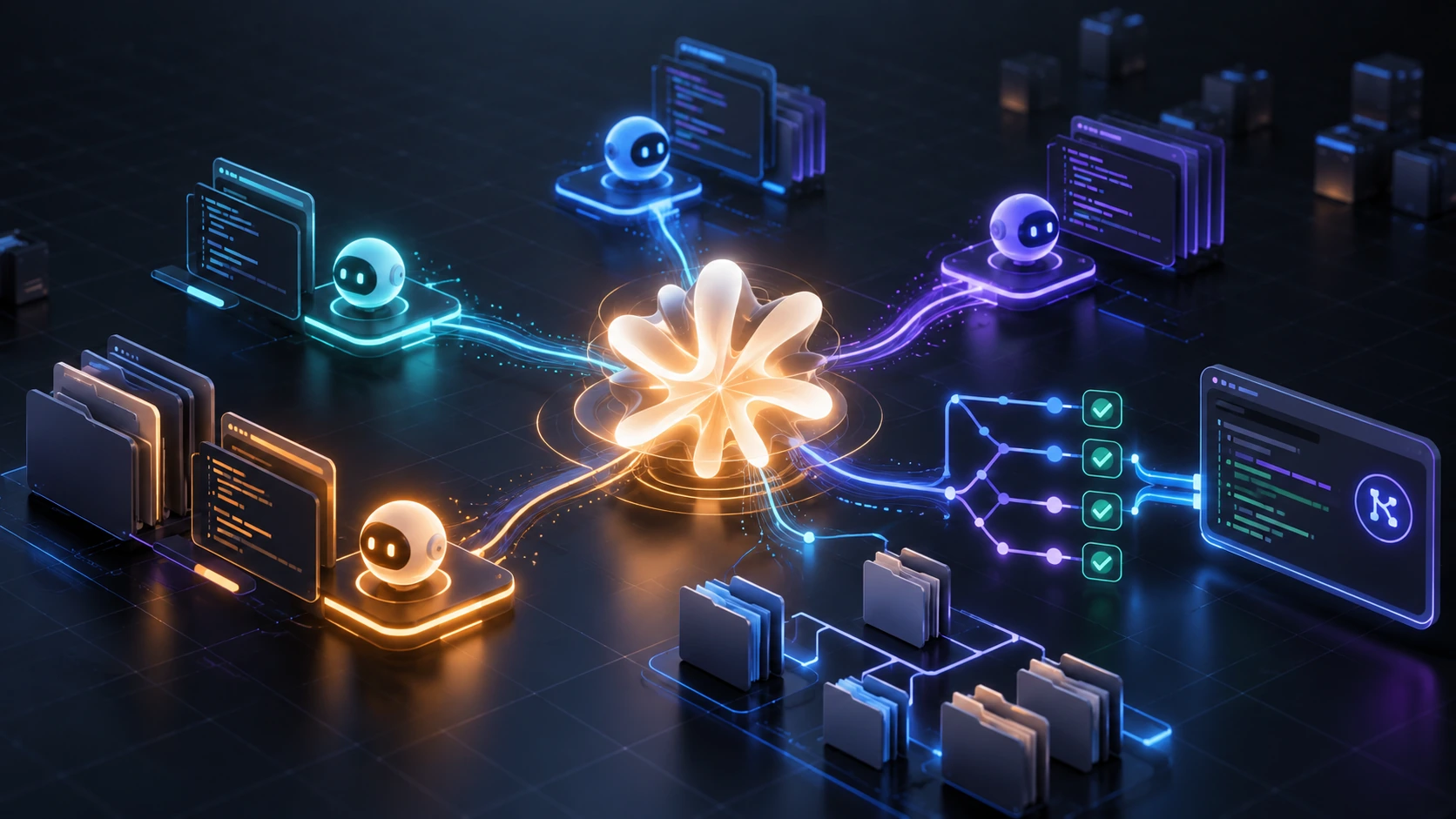
Anthropic is rolling out a new version of Projects, starting with Claude Code. The name sounds familiar, but the experience operates at a different scale: a project can now act as a coordinating conversation that distributes tasks across multiple Claude Code threads in the cloud.
You can send a bug, a list of improvements, or an entire migration. Claude decides what should become separate work, starts parallel sessions, and tracks what each one returns. You see progress in one overview, review files, and open pull requests.
That is a meaningful shift because coordination moves to the center. Claude Code becomes more than an agent working in one session and starts organizing a small digital team.
What Claude Code Projects is
According to the official documentation, each project has one main conversation and work threads. The conversation acts as the coordinator. Threads execute parts of the work in their own contexts and report back.
Cloud threads start with the project’s repositories, files, instructions, and memory. When they change code, they work on their own branch and can open a pull request. The Overview tab shows what is working, waiting for your answer, or ready for review. The Library collects files you add and deliverables Claude produces.
Work continues after you close your computer. You can also ask a task to run on your own machine through Remote Control when it needs a local database, VPN, or another tool unavailable in the cloud.
The difference on one screen
Three similar ideas. Three ways to work.
CLAUDE PROJECTSOrganized contextChats, files, instructions, and memory stay together for ongoing conversations.
- Claude chat and Cowork
- Up to 5 projects on Free
- RAG on paid plans
CLAUDE CODE PROJECTSAgent coordinationOne conversation sends tasks to parallel threads, each with its own context.
- Beta for Pro and Max
- Branches and pull requests
- File and deliverable library
CHATGPT PROJECTSWork spaceChats, files, instructions, memory, and tools gathered in a shareable project.
- Available by plan and workspace
- Apps, web, voice, and research
- Chat or edit access
The new Claude Code Projects flow
The difference from the original Projects
Claude’s original Projects remains available. It creates a space with its own chat history, files, instructions, and knowledge. The idea is to keep a topic’s context available so Claude can respond better in future conversations.
Paid plans also get RAG to expand document retrieval capacity. Team and Enterprise plans add sharing and permission features. This model works well for research, planning, or a reference library.
Claude Code Projects adds an execution layer. Instead of only asking questions inside a prepared context, you can send a stream of tasks and Claude can split it into threads, run parts in parallel, and gather the deliverables. The older Projects organizes memory. The new one coordinates work.
Is it the same as ChatGPT Projects?
The closest comparison is Projects in ChatGPT. According to OpenAI’s documentation, they bring chats, files, instructions, memory, apps, and tools together in a shareable space.
The goal is similar: avoid starting every conversation from zero. The main workflow is different:
| Feature | Claude Projects | Claude Code Projects | ChatGPT Projects |
|---|---|---|---|
| Focus | Context and conversations | Coordinated execution | Context, conversations, and tools |
| Automatic parallel threads | Not the focus | Yes | Not described as the core feature |
| Branches and pull requests | No | Yes, for coding work | Not the center of Projects |
| Memory and files | Yes | Yes | Yes |
| Collaboration | Team and Enterprise | Beta starts on Pro and Max | Depends on plan and workspace |
The Anthropic feature is therefore closer to an agent orchestration layer than to a smart folder for chats. ChatGPT can use tools, agent mode, and Codex in related experiences, but OpenAI presents Projects itself as a context and collaboration space.
Where it can matter
The expected gain appears when work has many independent parts:
- Update the same rule across several repositories.
- Fix a queue of bugs in one service.
- Run a large migration from a specification.
- Analyze documents and produce recurring reports.
- Keep a project active for days while new tasks enter the same conversation.
You do not need to repeat every rule in every session. You also do not need to open, name, and track each agent manually. Overview acts as a control center, with states such as working, waiting on you, and ready for review.
This fits agentic workflows: the value is not only the model’s answer, but the organized path from context to execution, verification, and delivery.
Risks and limits
Anthropic makes several limits clear:
- The feature is in public beta and is rolling out gradually to Pro and Max subscribers. Team and Enterprise are not included in this version yet.
- Several threads draw down plan usage faster. A new project starts with Opus on high effort for threads, which can increase consumption.
- Repository access requires GitHub and installation of the Claude GitHub App. Environments, secrets, connectors, and permissions need to be configured first.
- Each thread works independently. Branches and pull requests help with review, but do not remove conflicts, duplication, or wrong decisions.
- Preferences stated in the conversation can be saved to project memory, but the documentation says they function as instructions, not hard limits.
- Local tasks depend on the computer staying awake and connected to Remote Control.
Speed can also mislead. Four threads finishing at once do not mean four production-ready deliverables. The real gain depends on task decomposition, test quality, and human review.
Our take
Claude Code Projects is a significant evolution of the project concept. It turns persistent context into coordinated execution and moves software development closer to a team model, with specialized agents, visible states, and reviewable deliverables.
Its strength is reducing the invisible work of organizing sessions. Its main tradeoff is that autonomy grows alongside cost, permissions, and review surface.
For coding teams, the decisive test is simple: how many tasks reach a correct pull request with less rework and no added operational risk? That answer, more than the new interface, will show whether Claude Code Projects has become a production tool.