
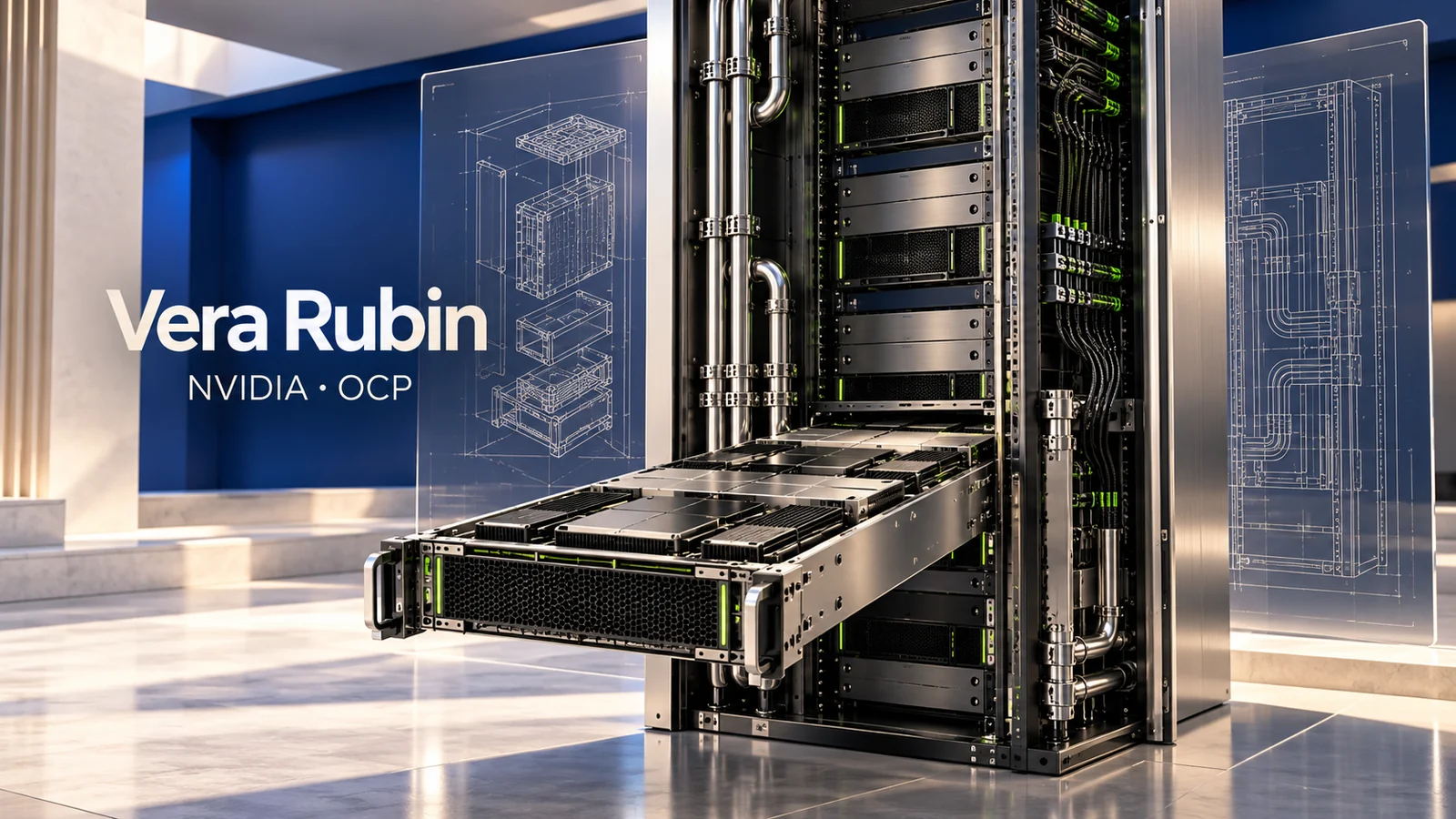
Buying GPUs addresses only part of an AI infrastructure project. Someone still has to power and cool the racks, configure the network and establish whether the system handles distributed load before handing it to users. NVIDIA's October 12 announcements at the Open Compute Project Global Summit target that gap between equipment and operation.
The company contributed Vera Rubin rack and compute-tray designs through its MGX architecture and highlighted open components of the DSX platform. The move expands the foundation vendors can use to integrate infrastructure. It does not mean all of the underlying chip technology has become open.
From hardware to an operating platform
The software deserves attention from platform teams. The package covers network configuration, cluster validation, rack management and hardware provisioning. Operators get components they can inspect and incorporate into their processes, potentially reducing the need to assemble each deployment from disconnected scripts.
Cluster Readiness Engine provides a concrete example. This Kubernetes controller runs training and communication workloads, measures performance and reports faulty nodes. Its repository states a useful boundary: it does not quarantine those nodes. That remains the responsibility of the platform integrating it.
This also limits what “certification” means. Passing a test suite provides evidence about the tested conditions rather than a permanent guarantee of cluster health. Teams still need to decide which failures block production, who handles them and when validation should run again.
Installed capacity becomes useful capacity when operations can identify and address the system's weak points.
Today's announcement builds on earlier work
The event brings contributions and integrations together, but not every component originated on October 12. Cluster Readiness Engine version 0.6.0 was already released on October 5. The Open Data Center 0.7.0 specification has an effective date of August 27; the grid-disturbance specification is effective September 17.
That chronology matters. The news is the expansion and coordination of this ecosystem at OCP, rather than the creation of every component on Monday. The specifications reflect a shared concern: fitting power, cooling and computing into a common design with interfaces manufacturers and operators can implement.
MnzAI Labs' reading is that openness can reduce integration uncertainty. Shared designs give suppliers known requirements to work toward; accessible code allows teams to review behavior and adapt automation. Those benefits still leave hardware costs, component dependencies and operational responsibility to resolve.
What architects should ask next
Teams that consume model APIs do not need an immediate migration in response. Teams operating or purchasing GPU capacity gain a more useful set of questions for their next supplier review.
Has the cluster been tested with representative distributed workloads? Are failures reported per node? Is there a clear isolation and recovery procedure? Can the operating software be audited, and does it have a defined upgrade path?
Before comparing accelerator counts, compare those answers. They help distinguish an equipment offering from a platform the team can keep running.
Sources: NVIDIA's OCP announcement, Cluster Readiness Engine and its boundaries, version 0.6.0 release, Config Manager, Open Data Center 0.7.0 and grid-disturbance specification.